The Weather Always Wins: Choosing a Shed Roof That Can Take British Rain
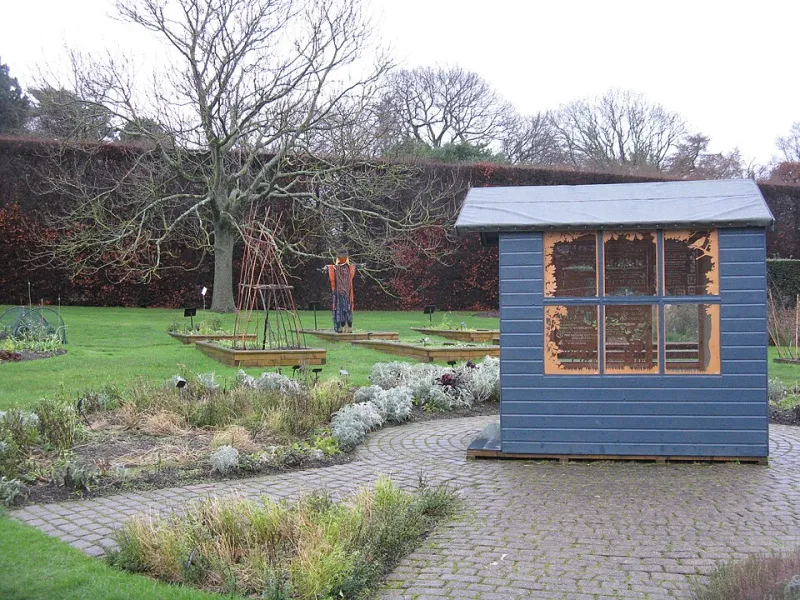
Photo: M J Richardson , CC BY-SA 2.0, via Wikimedia Commons
British rain rarely arrives politely. It comes sideways, sits in the low corner of a roof and finds the one fixing you did not seal properly. So choosing a shed roof is not really a style decision. It is a question of how much maintenance you are willing to do, how long you want the building to last, and how much you care about noise and condensation.
There are three coverings most garden sheds end up with: mineral felt, EPDM rubber and corrugated metal. Each has a sensible place. The trick is to match the roof to the building, the budget and your own tolerance for faff.
Start with what the roof has to do
A shed roof has to shed water quickly, cope with wind-driven rain, and allow the building underneath to breathe. It also has to survive being ignored. That last point matters more than most buyers expect. A roof that needs checking twice a year is fine if you are a shed person. If you are not, buy the one that asks less of you.
Before comparing coverings, look at the roof structure. Is the timber sound? Is there a fall towards the gutter? Are the fascia boards and fixings in good condition? A premium covering over a sagging deck is money wasted. If the existing roof is tired, budget for a new deck as well as the surface.
Mineral felt: cheap, familiar and slightly high-maintenance
Mineral felt is the traditional choice. It is widely available, inexpensive and can be fitted by a competent DIYer with a decent day of dry weather. A basic felt roof might cost roughly £4 to £8 per square metre in materials, though prices vary. Better-quality shed felt with a heavier mineral finish costs more but lasts longer.
Expect five to ten years from ordinary felt, perhaps longer from a good grade that is properly laid. The weak points are the laps and the fixings. Felt expands and contracts, nails can back out, and standing water will find every wrinkle. In driving rain, a poorly lapped felt roof is more vulnerable than a seamless one.
Repairs are straightforward: clean the area, let it dry, apply a suitable patch and seal. The trouble is that one patch often leads to another. Felt is a sensible choice for a small, low-value shed or a quick refresh before selling a house. It is less sensible for a workshop you intend to keep warm and dry for twenty years.
EPDM rubber: the quiet long game
EPDM is a synthetic rubber membrane, usually supplied as a large sheet or a kit cut to your roof size. It is seamless across the main roof area, which immediately removes the lap problem. It handles standing water and frost well, and it stays flexible in cold weather. A realistic lifespan is twenty to thirty years, sometimes more if the edges and flashings are done properly.
Cost is higher than felt, often around £12 to £25 per square metre for a kit depending on size and thickness. Installation is DIY-friendly but unforgiving in one respect: you need a clean, dry deck and a tidy glue line. The membrane itself is light and easy to position on a small roof. The details around edges, corners and outlets are where the job succeeds or fails.
Repairs are possible with EPDM patches and primer, though they are not as cheap or as instant as a felt patch. The bigger advantage is that you are less likely to need them. If your shed is a garden office, a workshop with tools in it, or a building you want to forget about, EPDM is often the sweet spot.
Corrugated metal: fast, tough and noisy
Corrugated steel or aluminium sheets are quick to install and very good at shedding heavy rain. A metal roof can last twenty to forty years, depending on coating and fixings. Costs vary widely, but expect roughly £15 to £30 per square metre for materials, plus fixings and flashings.
Metal is not difficult to install if you are comfortable measuring, cutting and working at height. It is less forgiving than rubber if you get the laps or fixings wrong. Use the correct screws with sealing washers, fix through the crests where the manufacturer says so, and allow for expansion. Walking on metal sheets is best avoided unless you know what you are doing.
Metal roofs are noisy in rain. That may be charming for five minutes and irritating by February. They are also prone to condensation on the underside unless you use an anti-condensation membrane, a breathable underlay or a ventilated cold roof. In driving rain, the main risks are water being pushed under laps and around fixings. Good detailing matters more than the sheet itself.
Condensation is the hidden argument
All three coverings need ventilation. A shed is not a sealed box, and warm, damp air from people, tools, plants or a kettle has to go somewhere. Metal is the most thermally conductive, so it cools fastest and drips first. Felt and EPDM are less dramatic, but they still need a breathable layer and sensible airflow.
If you are insulating the shed, deal with the roof as part of the whole build-up: ventilation path, insulation, vapour control and then covering. Do not simply screw insulation tight to the underside of a cold roof and hope. That is how you create a wet shed with a dry-looking roof.
What to inspect before another winter
On an existing roof, start safely from the ground. Look for sagging, ripples, blisters, lifted laps, moss and blocked gutters. Check the flashings around edges and any chimney or flue. Look for nails backing out of felt and for rust around metal fixings. Inside, check for stains, damp patches and condensation on the underside of the roof.
If you can inspect closely without climbing dangerously, look at the gutter outlet and the fall of the roof. Standing water is the enemy. A small repair now is cheaper than a new ceiling later. If the roof is already patchy, plan for replacement rather than adding another layer of hope.
The sensible shortlist
For a cheap shed that only has to last a few years, mineral felt is fine. For a long-term garden building where you want low fuss and no laps, EPDM is usually the easiest recommendation. For a robust outbuilding where noise is not an issue and the detailing is right, metal is excellent.
Buy the roof you can maintain, not the one that looks cheapest on the day. British weather will test it either way.