The Right Footing for a UK Shed: Five Bases Worth Considering — and One False Economy
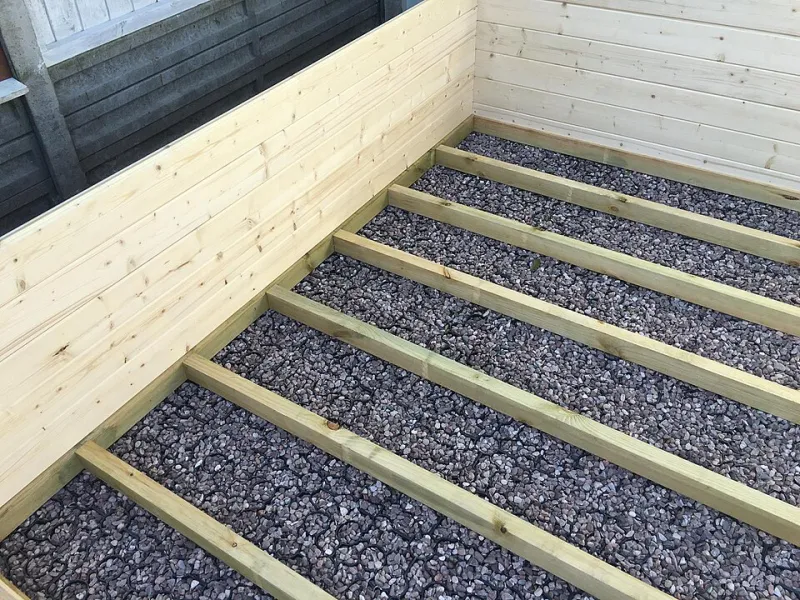
Photo: Guywall, CC BY-SA 4.0, via Wikimedia Commons
A shed base is not the glamorous part of a garden workshop. It is, however, the part that decides whether your tools stay dry, your floor stays flat and your door still closes after a wet British winter. Rain, frost and mud are relentless. The right base keeps the floor above the wet, lets air move underneath and spreads the weight of the shed and everything in it. The wrong one turns a cheap shed into an expensive lesson.
There is no single best base for every garden. A small potting shed on sandy soil has different needs from a heavyweight workshop packed with bench tools. Use this as a practical comparison, then match the base to your shed size, ground conditions and how much you want to spend.
What a base has to do
Four things matter most. Drainage: water must be able to run away from the shed, not sit under the floor. Ventilation: air needs to move under a timber floor so condensation and damp can escape. Frost heave: wet ground expands when it freezes, which can lift and crack a shallow base. Load: the base needs to carry the shed, the benches, the tools and you without settling unevenly.
A base that fails on drainage will usually fail on everything else eventually. So before you compare materials, look at the site. Does it slope? Does it puddle? Is the soil clay, sand or chalk? Is the shed going in a shady corner that never dries out?
Five bases worth considering
1. Timber bearers
Pressure-treated bearers laid on concrete pads or a gravel strip are the classic shed base for good reason. They are relatively cheap, quick to install and easy to level on a slightly uneven site. They also create an air gap under the floor, which helps ventilation. The catch is that timber only lasts if water can drain away. Bearers laid straight onto soil, or buried in wet ground, will rot. Use treated timber, keep it clear of the ground and make sure the ground beneath falls away from the shed. Best for small to medium sheds and DIY-friendly setups.
2. Concrete slab
A properly built concrete slab is the heavyweight option. It gives a solid, level floor for a workshop, handles heavy benches and machinery, and will outlast most sheds if it is built with a sub-base and a slight fall. It is also the most expensive and disruptive option. A thin slab on soft ground can crack, and a slab without drainage can trap water. If you are going for a large workshop or a shed that will house serious kit, concrete is often the sensible long-term choice — but only when it is done properly.
3. Gravel grids
Gravel grids are a good middle ground for UK gardens. The plastic grid holds gravel in place, spreads the load and lets water drain through. They work well on level or gently sloping sites and are kinder to tree roots than a concrete slab. They need a firm, level sub-base and edge restraint, or the grid will spread. Gravel grids are ideal for light to medium sheds, bike stores and garden rooms where drainage is a priority. They are less suited to a heavy workshop with a cast-iron bench.
4. Plastic eco-bases
Plastic eco-bases are modular panels that clip together and sit on a prepared, level surface. They are light, quick to install and give a ventilated gap under the shed floor. They are a neat solution for small sheds, bike sheds and storage units, especially where you want to avoid wet timber. The limitation is load. They are not the best choice for a heavy workshop, and they still need a firm, level base underneath. If the ground is soft or sloping, you will need to prepare it first.
5. DIY paving, done properly
Paving can make an excellent shed base if it is built like a proper patio: compacted sub-base, correct fall, and slabs bedded firmly. It is durable, easy to sweep and available in a range of finishes. The problem is the phrase 'done properly'. A few slabs on sand, or loose pavers on soil, will move, rock and hold water. If you are going to pave, excavate enough, use a proper sub-base and keep a fall away from the shed. Best for medium sheds on level sites where you want a hard-standing look.
The one to avoid: pallets, bricks and bare soil
The false economy is the pallet-and-brick base: a couple of pallets, some loose bricks, maybe a sheet of old ply. It is cheap for a weekend and expensive by the second winter. There is no proper ventilation, no drainage and no load spreading. The shed settles, the floor bounces, the door drops and the timber starts to rot. Laying a shed floor directly on soil is the same mistake with fewer steps. If the budget is tight, use treated bearers on a gravel strip rather than skip the base altogether.
Matching the base to your shed and site
For a small shed on a level, well-drained site, timber bearers or a plastic eco-base are usually enough. For a medium shed, gravel grids or properly laid paving are a good balance of cost and drainage. For a large workshop with heavy benches and tools, concrete is often the most reliable choice, provided it has a sub-base and a fall. On clay soil, drainage matters more, so gravel grids and raised bearers tend to work well. On a sloping site, timber bearers on adjustable pads can be easier than digging a slab.
Cost and sizing notes
As a rough 2026 guide, timber bearers are one of the cheapest options, concrete is usually the most expensive, and gravel grids and plastic bases sit in the middle. Prices vary by region, access and whether you are doing the work yourself. Do not size the base to the shed footprint exactly; allow a little extra for the door threshold, gutters and future maintenance. And always check the shed manufacturer's base requirements, because some kits are fussier than others.
A good base is not the part anyone photographs. It is the part that lets you forget about the floor and get on with using the shed. Get the drainage and ventilation right, keep the timber clear of wet ground, and your workshop will feel a lot more solid when the frost comes.